


When Saudi Arabia’s East-West pipeline, the Petroline, was struck on September 10, the reporting said pump stations near Al Mesba’ah (Pumping Station 11) and Al Dhekra (PS 9), southeast of Medina. Brent shot past $100, the kingdom shut the line, and the coverage was scattered, everyone moved on and the price of oil followed. The question every outlet skipped is the one that matters most: which stations were hit, AND why those three pumping stations specifically?
The Petroline is the line Saudi Arabia built to carry crude west to the Red Sea port of Yanbu without passing through the Strait of Hormuz.
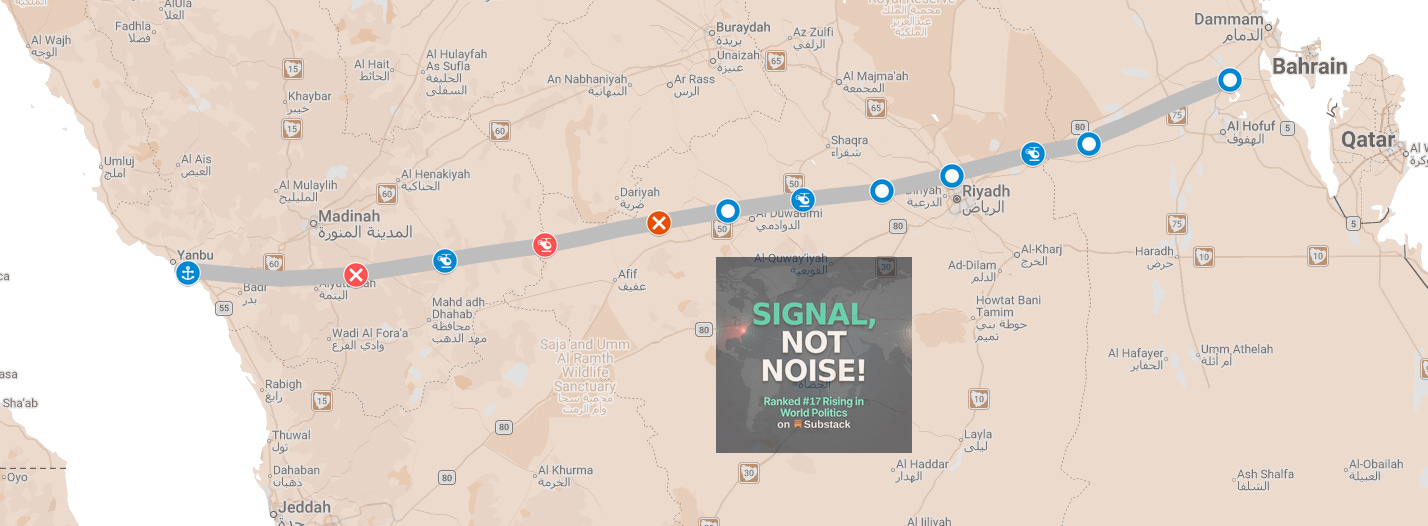
With the Strait of Hormuz choked by this war, the pipeline became the kingdom’s only real bypass, which is why a strike on it moved the global oil price. This is the most detailed targeting investigation I have done on this war so far, and it has brought me to a conclusion I do not state lightly, because I do not hold hard proof of it. But the evidence points one direction. The specific stations chosen, the elevations, the order, and the physics behind the target selection are too precise to be luck or general planning.
In my assessment, this Ansrallah Houthi targeting cell had inside knowledge, most likely help from someone with engineering access at Aramco, specifically in hydraulics, engineering or piping. Here is the evidence that brought me there.
Which three oil pumping stations, and why the elevations are the tell
Three pump stations were struck: PS-8 at Afif, PS-9 at Al-Dhekra, and PS-11 at Al-Mesba’ah. Every one of them sits on the western climb, high in the Hijaz mountains, and that is the first sign this was not random.
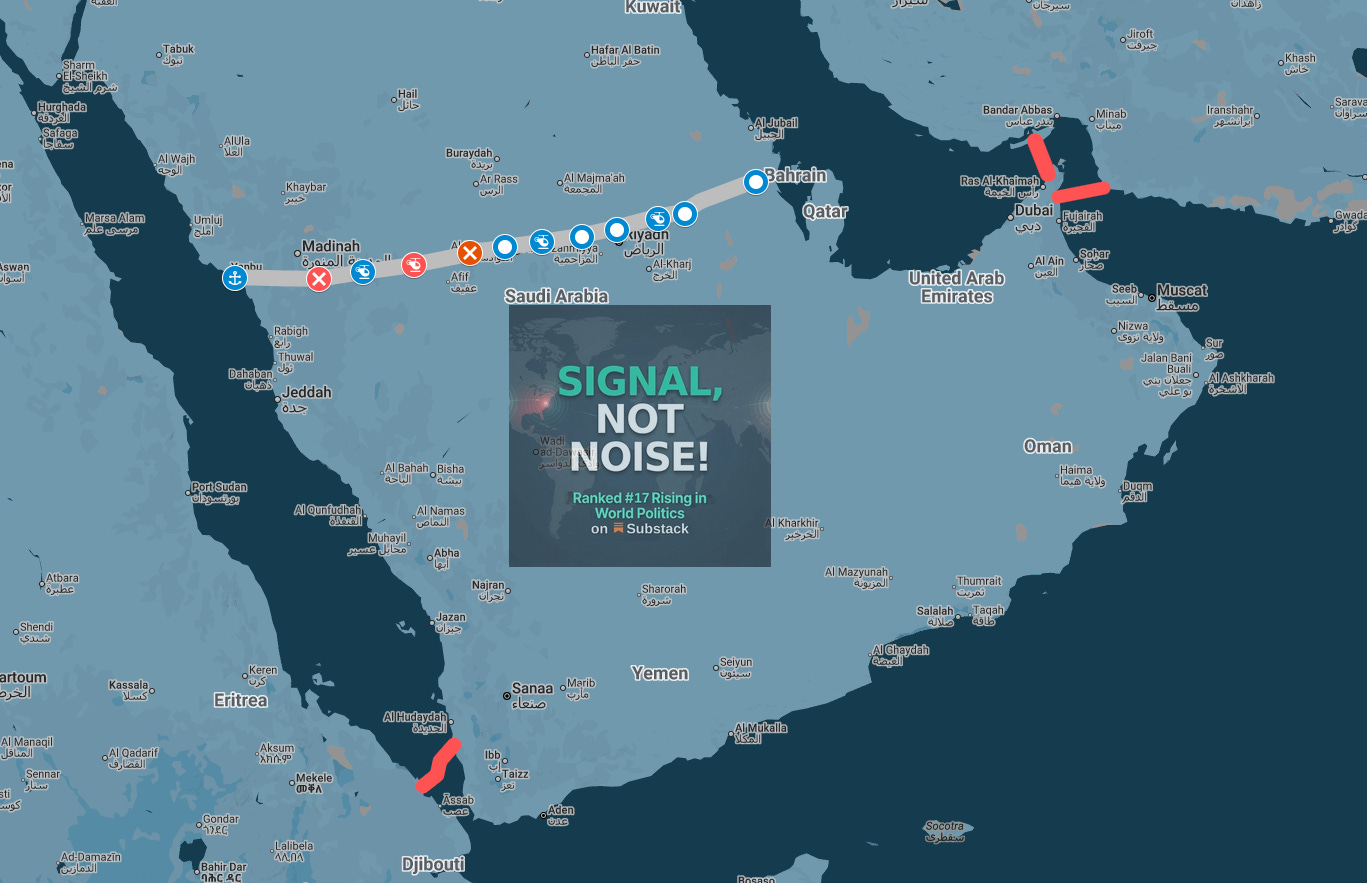
The Petroline does NOT run flat. From the Abqaiq complex near sea level on the East coast of the Persian / Arabian Gulf, it ascends across the Najd plateau, then up into the western highlands, cresting above 1,000 metres before the steep drop down the Tihama escarpment to Yanbu on the Red Sea.
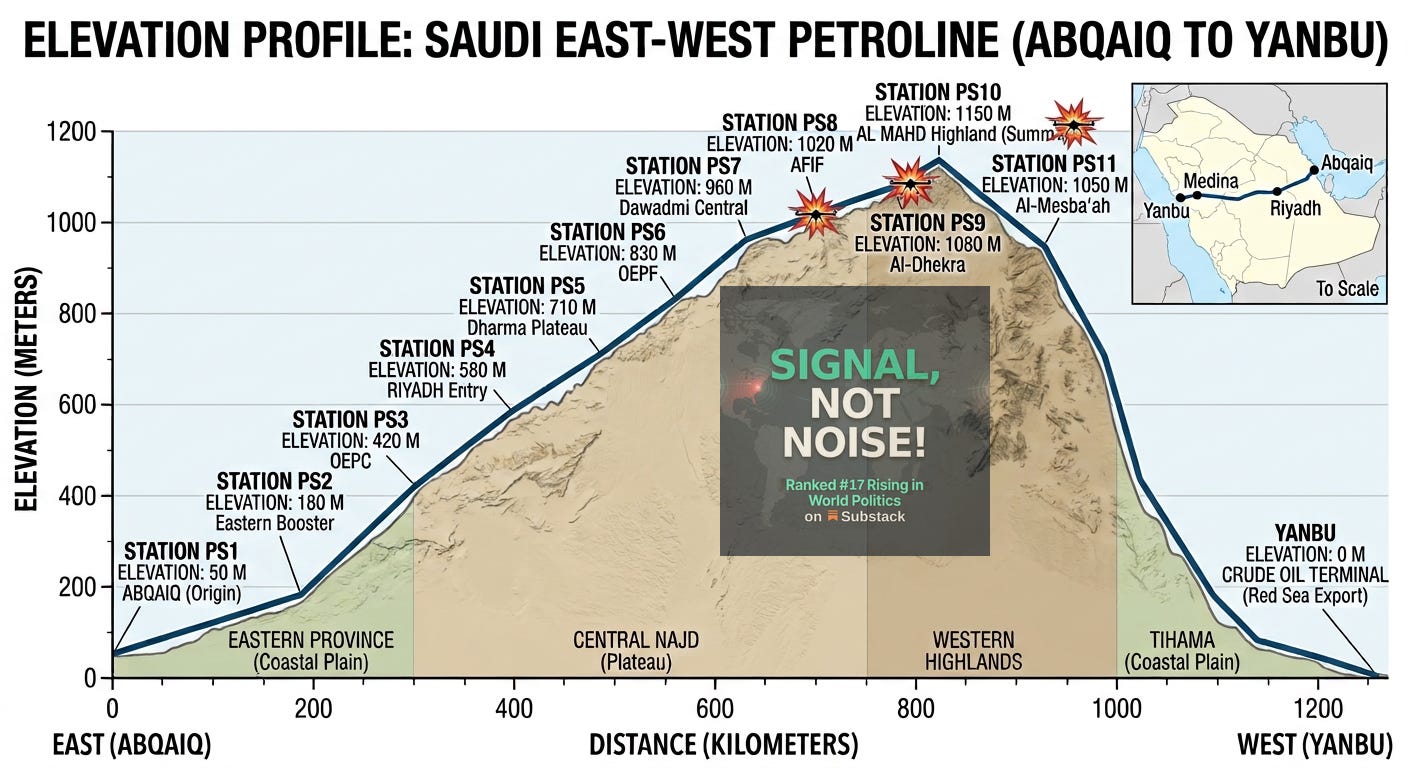
Pushing crude up that grade is the hardest work the entire line does. The eastern stations, on flat ground, were left untouched. The three that were destroyed are all on the mountain, at roughly 1,020, 1,080, and 1,050 metres above sea level.
